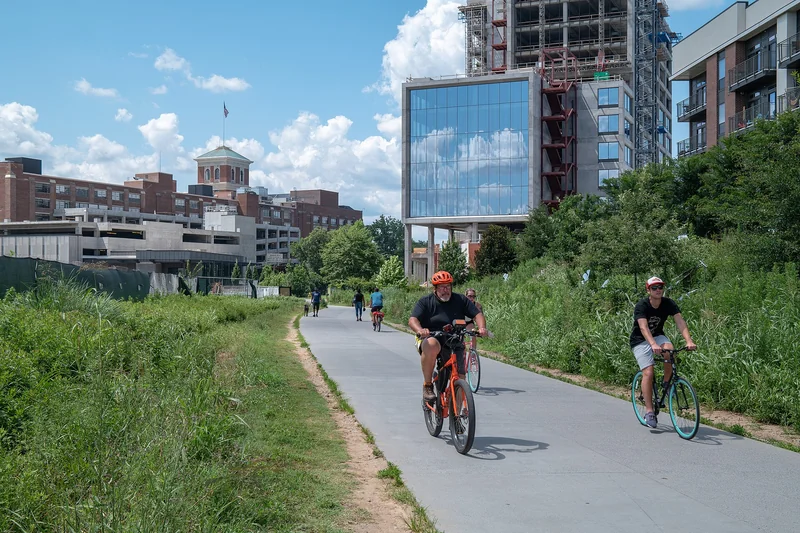
Glynn County occupies the Georgia coast between Brunswick and the state's barrier islands — the Golden Isles. Jekyll Island, once the private winter retreat of Gilded Age industrialists, is now a state-owned park with 10 miles of beach and a 240-acre National Historic Landmark. St. Simons Island, connected by causeway to the mainland, holds Christ Church on a site where John Wesley preached in 1736. These three attractions cover the essential range of the Georgia coastal islands.
3 destinations selected from a curated US travel dataset — prioritized by regional distribution, visitor significance, and independent research. Must-see and Worth-the-detour ratings reflect relative value within Georgia.
Jump to: Jekyll Island · St. Simons Island · Planning Notes · Also worth visiting
Jekyll Island
Jekyll Island is a barrier island owned by the State of Georgia, accessible via the Jekyll Island Causeway from Brunswick. A vehicle access fee applies at the gatehouse. The island has 10 miles of beaches, 20 miles of bike paths, and the Historic District on its southern end.
Driftwood Beach (Jekyll Island) Must-see
Glynn County · Jekyll Island
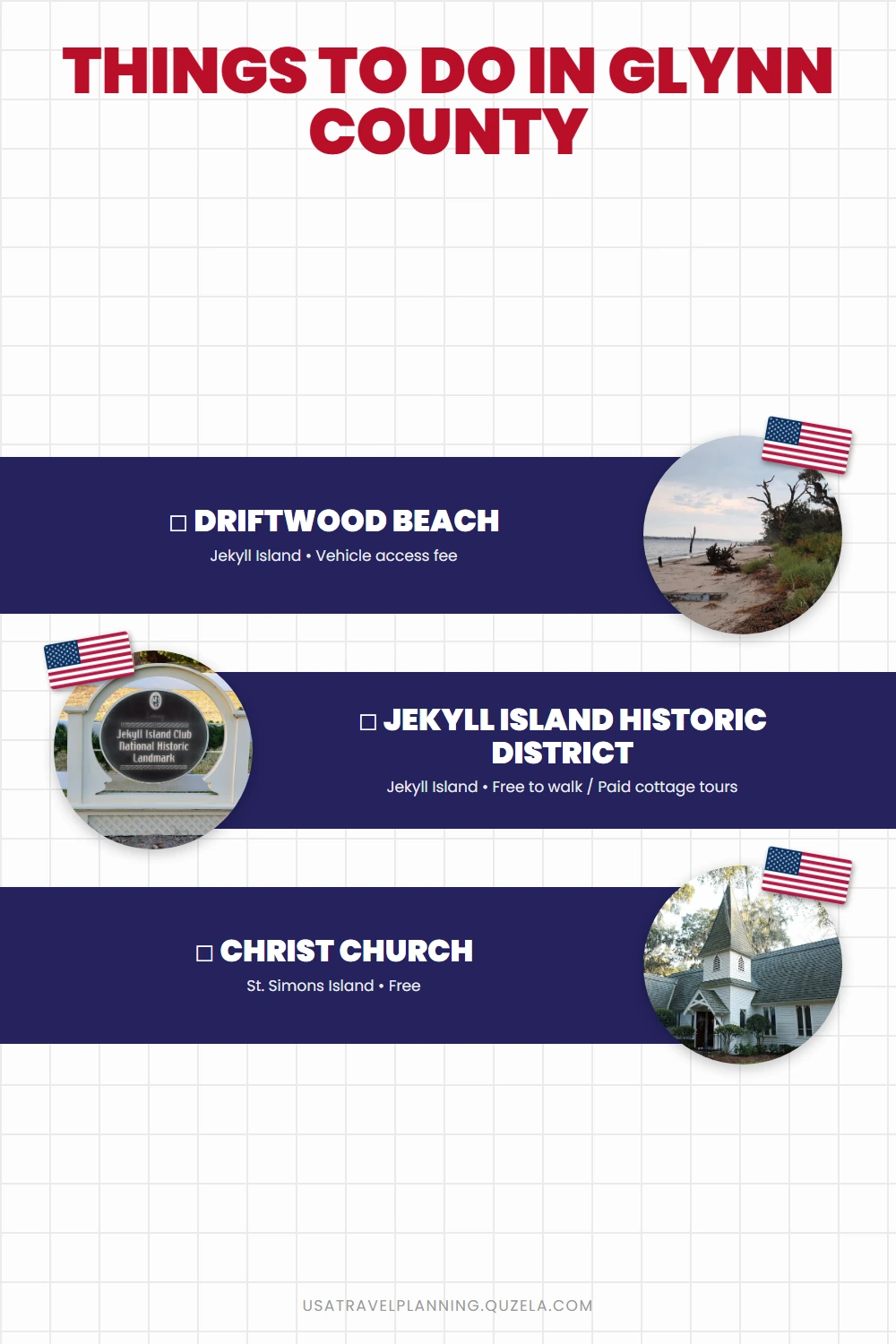
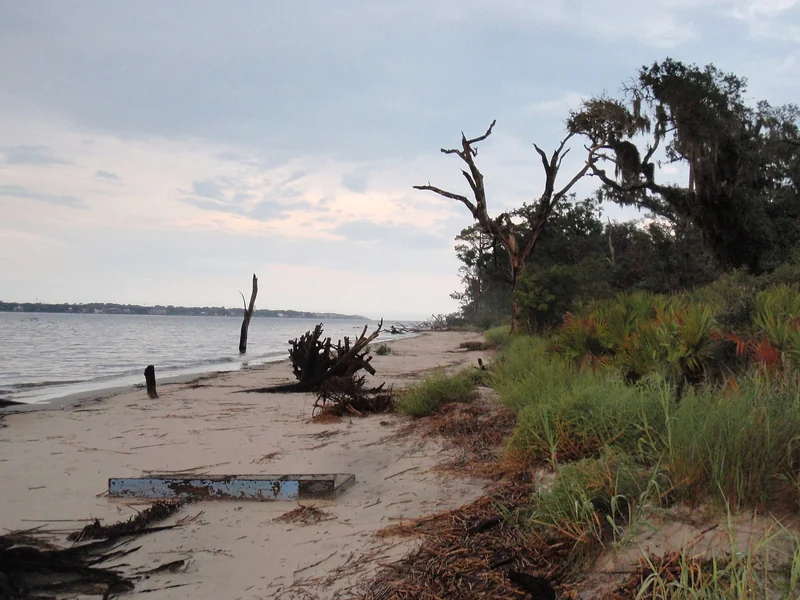
A stretch of beach on the northern end of Jekyll Island where centuries of saltwater intrusion have killed the ancient maritime forest, leaving thousands of bleached oaks and palms standing on the shoreline. The result is a natural sculpture garden of twisted white driftwood trees against the beach and open water — the most photographed stretch of coastline in Georgia. The beach is accessible by the Jekyll Island road system; park at the north end pullout and walk the shoreline. Free once inside the island (vehicle access fee to reach the island).
Right for photographers, couples, and anyone wanting the most distinctive coastal scenery in Georgia; the bleached tree formations are unlike anything else on the East Coast. Worth the island vehicle fee on its own.
Watch on YouTube · View on Google Maps
Jekyll Island Historic District Worth the detour
Glynn County · Jekyll Island
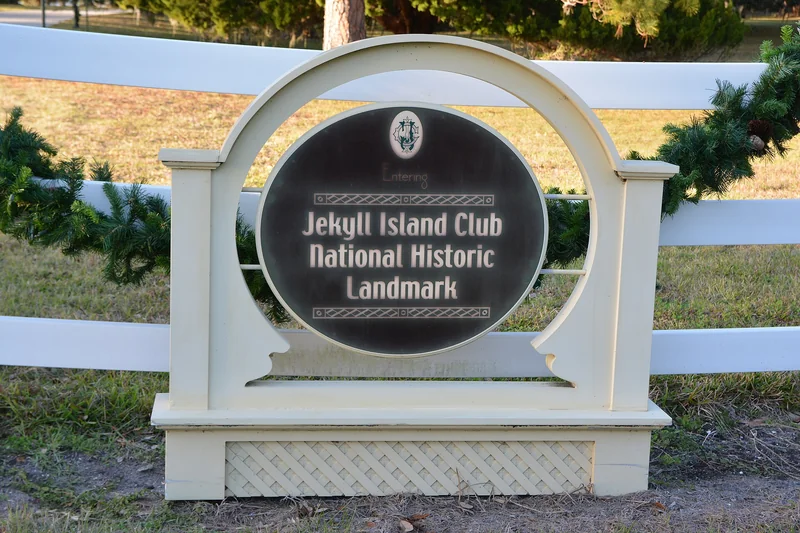
A 240-acre National Historic Landmark on the southern end of Jekyll Island — the preserved winter compound of the Jekyll Island Club, a private retreat for Gilded Age industrialists from 1886 to 1942. Members included Rockefellers, J.P. Morgan, the Vanderbilts, and the Pulitzers, who built elaborate "cottages" (full-scale mansion retreats) around the restored 1887 clubhouse. The original club building now operates as the Jekyll Island Club Resort hotel. Individual cottages are open for museum tours on a paid basis; the grounds and exterior are free to walk. The first transcontinental telephone call (1915) was made from the club's Sans Souci building.
Right for Gilded Age history enthusiasts, architecture travelers, and visitors interested in American wealth and power at the turn of the 20th century. The grounds are worth walking even without paying for a cottage tour.
Watch on YouTube · View on Google Maps
USA Travel Planner — Google Sheets
One purchase. Every US state. Forever.
A pre-filled travel dashboard for every US state — we are actively building them out.
- 75+ curated attractions — pre-researched for you
- Built-in budget tracker (countdown, expenses, remaining)
- Step-by-step planning tabs
- Buy once — get all future states free as they launch
St. Simons Island
St. Simons Island is a larger residential barrier island connected to Brunswick by the F.J. Torras Causeway (free to cross). The island has a village commercial area, several beaches, and the Fort Frederica National Monument site on its northern end.
Christ Church (St. Simons Island) Worth the detour
Glynn County · St. Simons Island
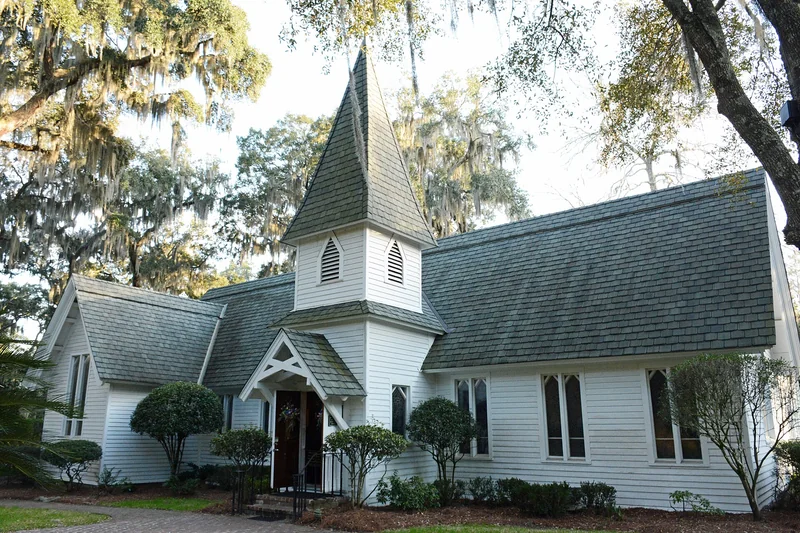
An 1820 Gothic Revival church at 6329 Frederica Road on the site where Anglican missionary John Wesley preached to English colonists at Fort Frederica in 1736 — considered the founding moment of Methodism in North America. The current church was built by Anson Greene Phelps Dodge Jr. as a memorial to his wife in 1884; the 1820 building it replaced is the one referenced in the historical record. The surrounding cemetery has graves dating to the 18th century. The church is still active; grounds accessible daily, free of charge.
Right for Methodist history travelers and those interested in colonial Georgia; the John Wesley connection makes it significant beyond the building itself. A brief 20-minute stop — the grounds and cemetery are the highlight.
Watch on YouTube · View on Google Maps
Planning Notes
Where to stay: Jekyll Island has on-island hotels including the Jekyll Island Club Resort — the right base for Driftwood Beach and the Millionaires' Village without a causeway commute. St. Simons has a more active restaurant scene and diverse lodging. Brunswick on the mainland is cheaper but requires driving the causeway every day.
Book ahead: Jekyll Island Club Resort fills months in advance for summer and holidays. Jekyll Island campground sites also require advance reservation in peak season through georgiasateparks.org. St. Simons boutique properties and vacation rentals fill for summer — book 1–2 months ahead.
Getting around: A car is essential — Jekyll Island and St. Simons are on separate barrier islands requiring separate causeway drives. The Jekyll Island vehicle entry fee applies year-round. Driftwood Beach is best at dawn before crowds arrive; plan an early start if staying on the mainland.