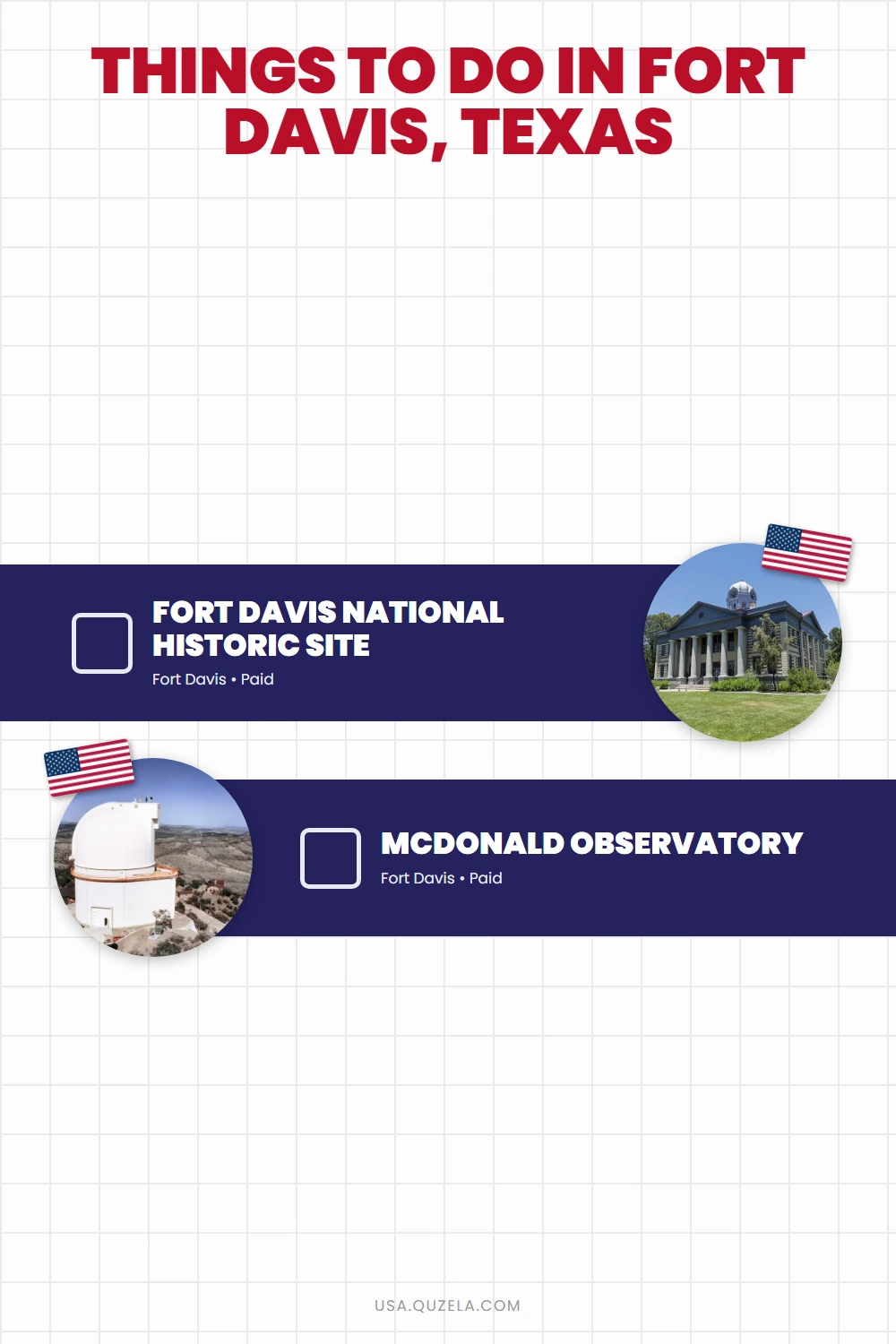
Fort Davis sits at 4,900 feet in the Davis Mountains, 160 miles east of El Paso — genuinely remote by Texas standards. Two attractions make the drive worthwhile: Fort Davis National Historic Site, the best-preserved frontier military post in the American Southwest, and McDonald Observatory, operating at 6,791 feet with the darkest skies available to the public in the continental United States. Together they take a full day; most visitors overnight to catch an evening Star Party.
2 destinations selected from a curated US travel dataset — prioritized by regional distribution, visitor significance, and independent research. Must-see and Worth-the-detour ratings reflect relative value within Texas.
Jump to: History & Heritage · Stargazing & Science · Planning Notes · Also worth visiting
History & Heritage
Fort Davis National Historic Site Must-see
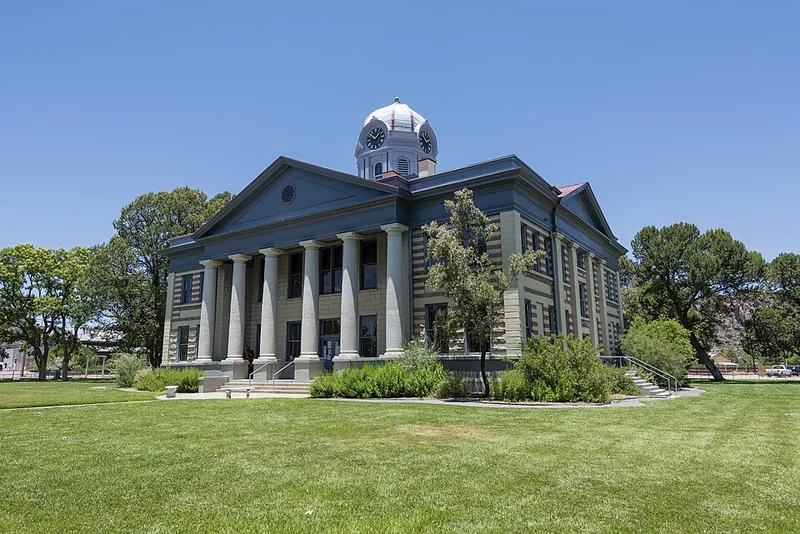
Jeff Davis County · Fort Davis
Fort Davis was an active U.S. Army post from 1854 to 1891, guarding the San Antonio–El Paso Road and serving as home base for the Buffalo Soldiers — African American cavalry regiments who patrolled 75,000 square miles of West Texas frontier. It's the best-preserved frontier military fort in the American Southwest, with 50 original or restored buildings across 460 acres. The National Park Service restored five buildings to their 1880s appearance; the Barracks Museum re-creates daily life of a Buffalo Soldier cavalry company. Entry is $10 per person (America the Beautiful Pass accepted); allow 2–3 hours. A recorded bugle call plays through outdoor speakers at set intervals, giving the grounds a living-history atmosphere.
Right for frontier and Buffalo Soldiers history enthusiasts making the West Texas drive; the best-preserved frontier fort in the American Southwest is worth the dedicated trip. Allow 2–3 hours and time a visit for when the recorded bugle call sounds through the outdoor speakers.
Watch on YouTube · View on Google Maps
USA Travel Planner — Google Sheets
One purchase. Every US state. Forever.
A pre-filled travel dashboard for every US state — we are actively building them out.
- 75+ curated attractions — pre-researched for you
- Built-in budget tracker (countdown, expenses, remaining)
- Step-by-step planning tabs
- Buy once — get all future states free as they launch
Stargazing & Science
McDonald Observatory Must-see
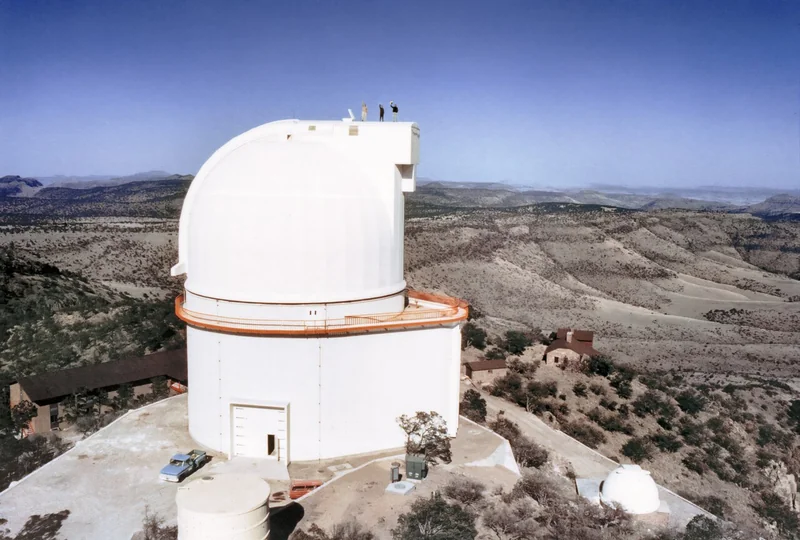
Jeff Davis County · Fort Davis
McDonald Observatory sits at 6,791 feet on Mount Locke in the Davis Mountains, operated by the University of Texas. The Chihuahuan Desert location produces clear skies over 80% of nights and some of the lowest light-pollution readings in the continental United States. The Frank N. Bash Visitors Center is open daily with science exhibits and solar viewing at 2 p.m. ($8 admission). Star Party programs run Tuesday, Friday, and Saturday evenings year-round ($25 per person), with guided telescope viewing of planets, star clusters, and nebulae using the 107-inch Harlan J. Smith Telescope — the largest available for public viewings in the United States. Reserve Star Party tickets online; they sell out 2–3 weeks ahead in fall.
Right for stargazers, science enthusiasts, and visitors who have never used a research-grade telescope; the Star Party program with the 107-inch Harlan J. Smith Telescope is among the best public astronomy experiences in the United States. Book 2–3 weeks ahead in fall — tickets sell out reliably.
Watch on YouTube · View on Google Maps
Planning Notes
Where to stay: Fort Davis has a handful of small hotels, bed-and-breakfasts, and the historic Limpia Hotel on the town square. Book early — the town's lodging capacity is limited and fills fast on Star Party weekends. Marfa, 21 miles south on US-17, has additional boutique hotel options.
Book ahead: McDonald Observatory Star Party tickets sell out 2–3 weeks ahead in fall and on holiday weekends — buy on the observatory website as soon as your dates are set. Fort Davis National Historic Site is walk-in with no reservations required. Lodging in Fort Davis and Marfa should be reserved 4–6 weeks ahead for any Friday or Saturday night.
Getting around: Fort Davis is a car-only destination. McDonald Observatory is 16 miles north of town on TX-118 — a 25-minute drive through the Davis Mountains. No rideshare or taxi service operates in the area. Gas up in Fort Davis or Marfa; stations are sparse in the surrounding mountains.