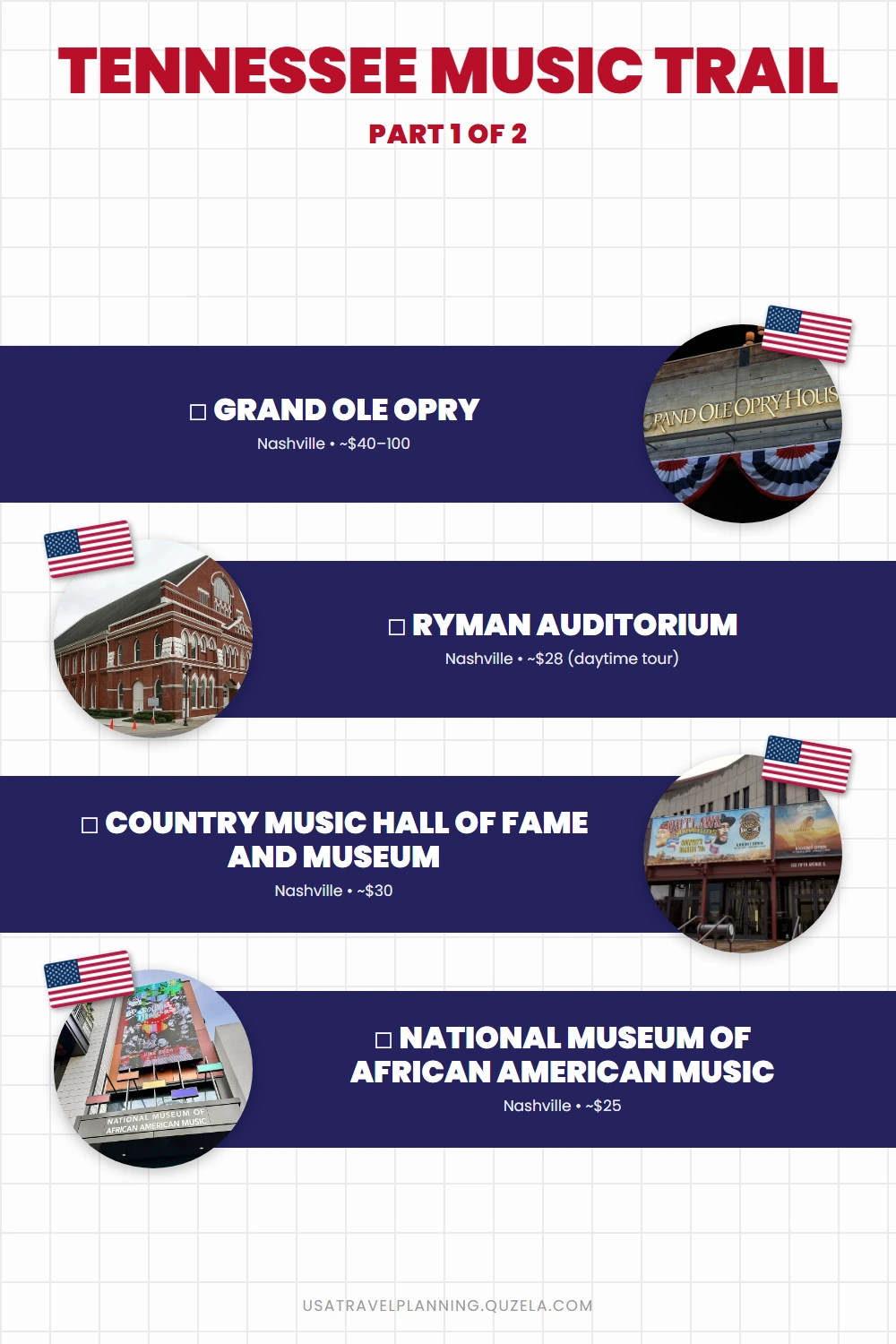
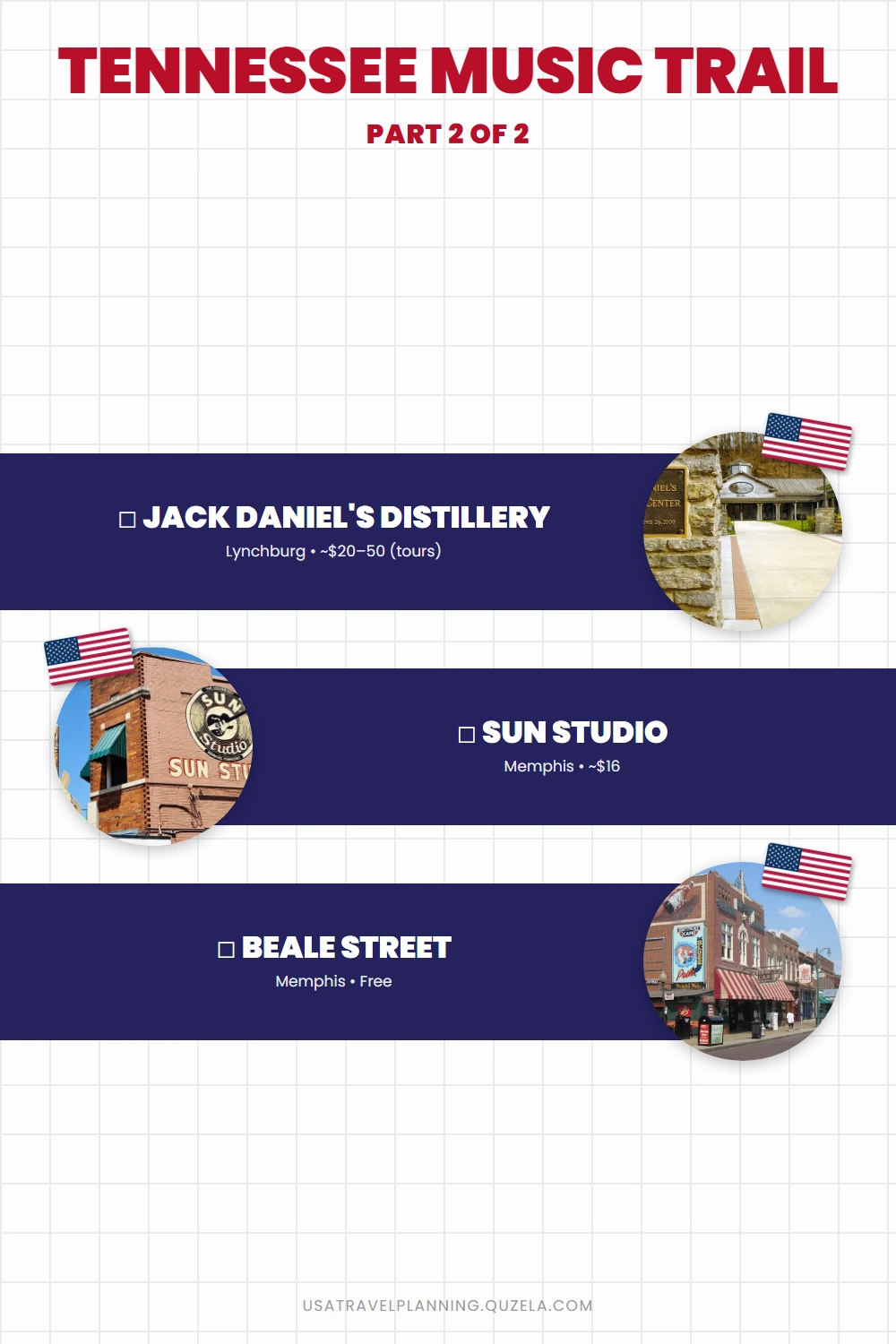
Nashville and Memphis are 200 miles apart on Interstate 40 — the two poles of Tennessee's music identity. Nashville built country music into a global industry: the Grand Ole Opry has broadcast every week since 1925, the Country Music Hall of Fame holds 2.5 million artifacts, and Lower Broadway sustains live music from noon to 3 AM. Memphis gave the world the blues, soul, and the raw recordings at Sun Studio that launched Elvis, Johnny Cash, and Jerry Lee Lewis.
This trail connects the two cities with a midpoint stop at Jack Daniel's Distillery in Lynchburg — 70 miles south of Nashville, adding about 90 minutes to the route. Nashville-to-Memphis via Lynchburg is the most complete version; the direct I-40 route takes 3 hours 15 minutes.
7 destinations selected from a curated US travel dataset — prioritized by regional distribution, visitor significance, and independent research. Must-see and Worth-the-detour ratings reflect relative value within Tennessee.
Jump to: Nashville · Midpoint: Moore County · Memphis · Planning Notes
Nashville
Nashville's music institutions run from the historic Ryman Auditorium downtown to the purpose-built Opry House 8 miles east — with two world-class museums in between.
Grand Ole Opry Must-see
Davidson County · Nashville
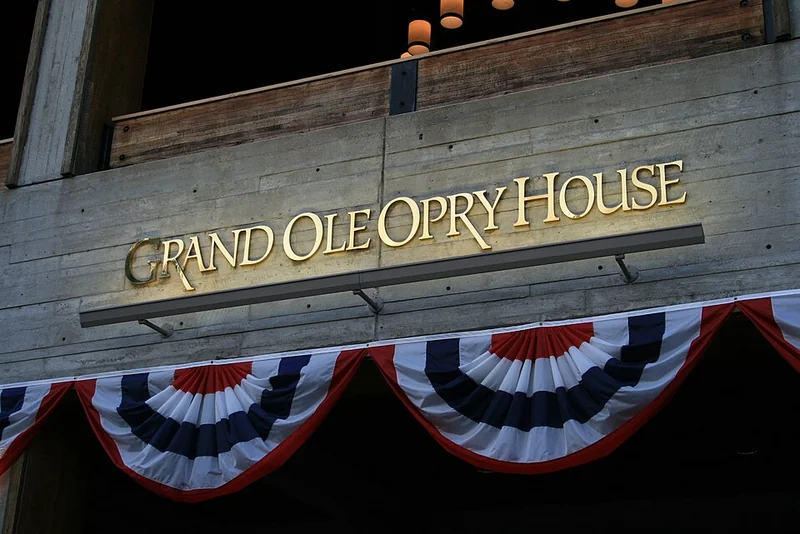
The Grand Ole Opry began as a WSM radio broadcast on November 28, 1925 — the world's longest-running live radio program. The show moved to its current 4,400-seat Opry House at the Opryland complex in 1974 after outgrowing the Ryman Auditorium; it runs about 200 shows a year featuring active Opry members and guest artists across every generation of country music. Saturday night shows are the flagship event. Tickets run $40–100 depending on lineup. The Opry is at 2804 Opryland Drive, 8 miles from downtown Nashville — rideshare or the hotel shuttle is the easiest way to get there.
Watch on YouTube · View on Google Maps
Ryman Auditorium Must-see
Davidson County · Nashville
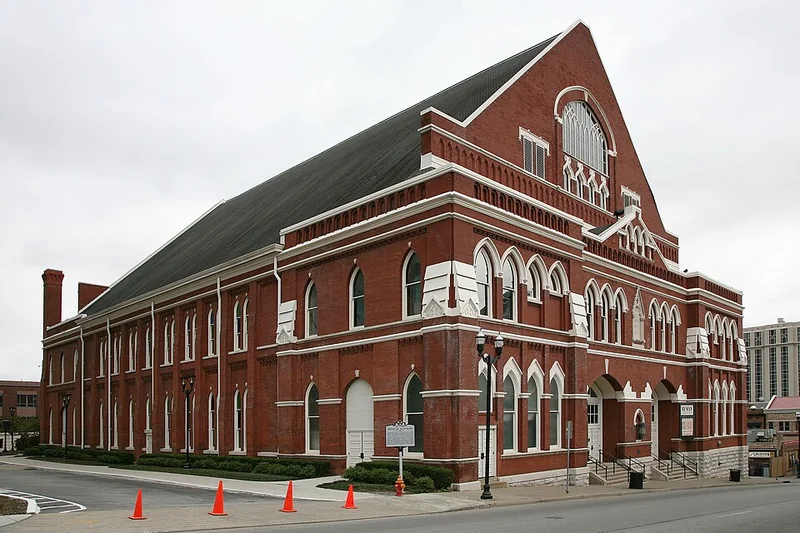
Built in 1892 as a gospel revival tabernacle, the Ryman Auditorium served as the Grand Ole Opry's home from 1943 to 1974 — the period that produced country music's golden era. Every major country artist of that period performed here: Hank Williams Sr., Patsy Cline, Johnny Cash, Loretta Lynn, and Dolly Parton all played this stage during the Opry years. The 2,362-seat hall still books concerts today and hosts daytime self-guided tours at about $28. Original church-pew seating remains; the acoustics were designed for unamplified human voices and remain exceptional. Located at 116 5th Ave N in downtown Nashville, two blocks from Lower Broadway.
Watch on YouTube · View on Google Maps
Country Music Hall of Fame and Museum Must-see
Davidson County · Nashville
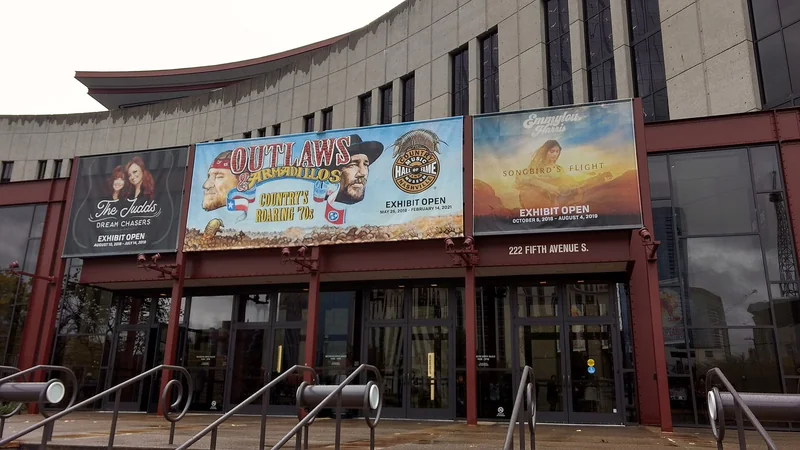
The Country Music Hall of Fame and Museum holds 2.5 million artifacts across 350,000 square feet at 222 Rep. John Lewis Way S. Permanent collections include Elvis Presley's gold Cadillac, Hank Williams Sr.'s 1952 tour car, handwritten lyrics from the 20th century's defining country songwriters, and the Hall of Fame rotunda recognizing 150+ inductees. Temporary exhibitions cycle through active artists and specific eras. Admission runs about $30; the museum is open daily and a tunnel connects it to RCA Studio B, where Elvis recorded in Nashville from 1957 onward (separate ticket required).
Watch on YouTube · View on Google Maps
National Museum of African American Music Must-see
Davidson County · Nashville
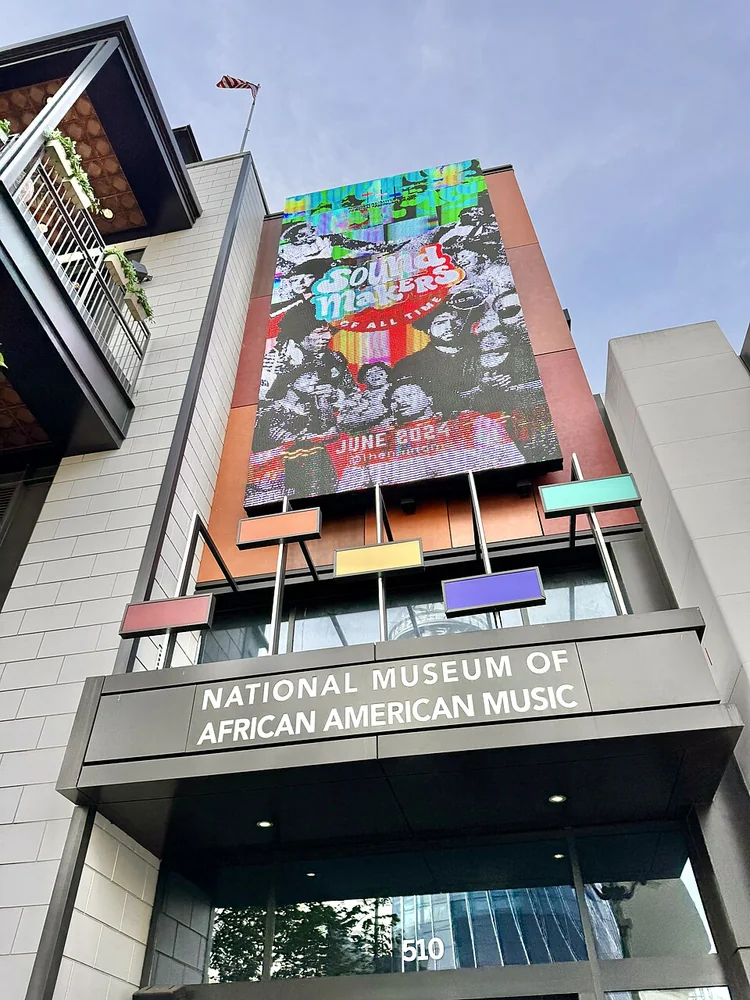
NMAAM opened in January 2021 at 510 Broadway, half a block from the Country Music Hall of Fame. The 56,000-square-foot museum covers 400 years of Black American music across 14 genres — blues, gospel, jazz, R&B, hip-hop, country, and more — through 1,500 artifacts and interactive exhibits. The exhibit connects Nashville's Fisk Jubilee Singers (1871) to the Harlem Renaissance, the Chicago blues migration, Motown, and contemporary artists. A recording studio inside lets visitors lay down tracks. Admission runs about $25; audio guides are included.
Watch on YouTube · View on Google Maps
Midpoint: Moore County
Jack Daniel's Distillery Must-see
Moore County · Lynchburg
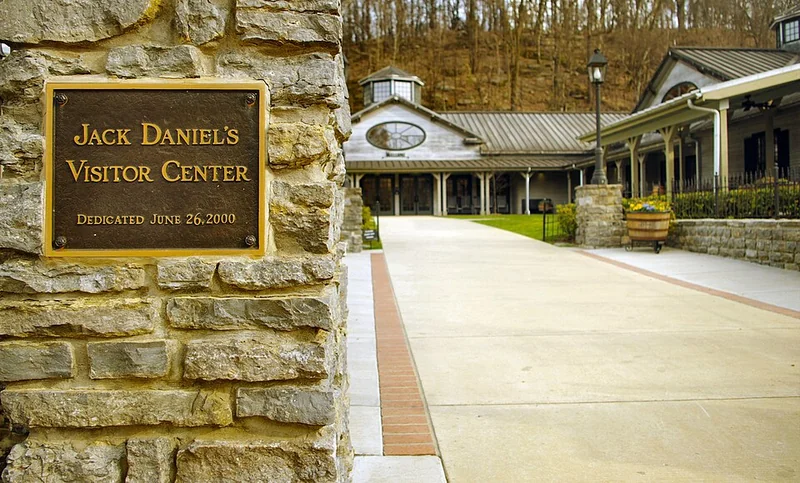
Jack Daniel's Distillery in Lynchburg is the oldest registered distillery in the United States, established in 1866. The 90-minute tour covers the entire production process — grain milling, fermentation, the Lincoln County Process (filtering Tennessee whiskey through 10 feet of sugar maple charcoal before barreling), and the rickhouses where more than 2 million barrels age in storage. Lynchburg sits in Moore County, which is a dry county: no bars serve whiskey in town, but bottles can be purchased at the distillery gift shop. Tours run $20–50 depending on depth; reservations recommended. The distillery is 70 miles south of Nashville on US-231 — plan a 90-minute detour from the I-40 corridor.
Watch on YouTube · View on Google Maps
USA Travel Planner — Google Sheets
One purchase. Every US state. Forever.
A pre-filled travel dashboard for every US state — we are actively building them out.
- 75+ curated attractions — pre-researched for you
- Built-in budget tracker (countdown, expenses, remaining)
- Step-by-step planning tabs
- Buy once — get all future states free as they launch
Memphis
Memphis is where blues, soul, and early rock and roll were recorded and performed — the other end of Tennessee's music identity from Nashville's country establishment.
Sun Studio (Walk the Line, 2005 + Music Documentaries) Must-see
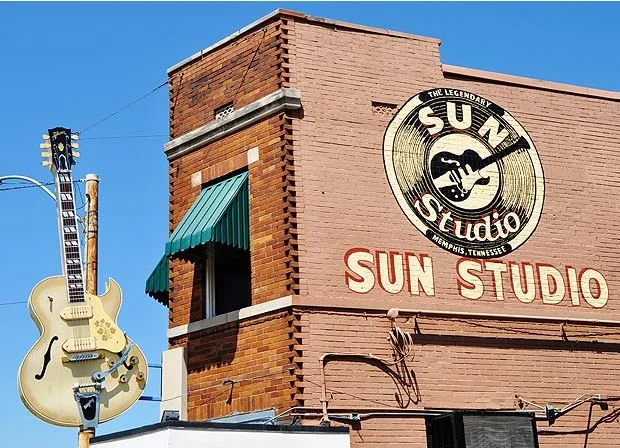
Shelby County · Memphis
Sam Phillips opened Sun Studio at 706 Union Avenue in 1950. Elvis Presley recorded his first commercial single — "That's All Right" — here in July 1954 in a single session. Johnny Cash, Jerry Lee Lewis, Roy Orbison, B.B. King, Howlin' Wolf, and Ike Turner all recorded on the same equipment. The studio is still in commercial use (U2 and Ringo Starr have recorded here) and offers 45-minute tours ending with visitors standing on the original studio floor, handling the period microphones. Walk the Line (2005) and multiple music documentaries have filmed on-site. Tours run hourly from 10 AM to 5:30 PM; tickets are about $16.
Watch on YouTube · View on Google Maps
Beale Street Must-see
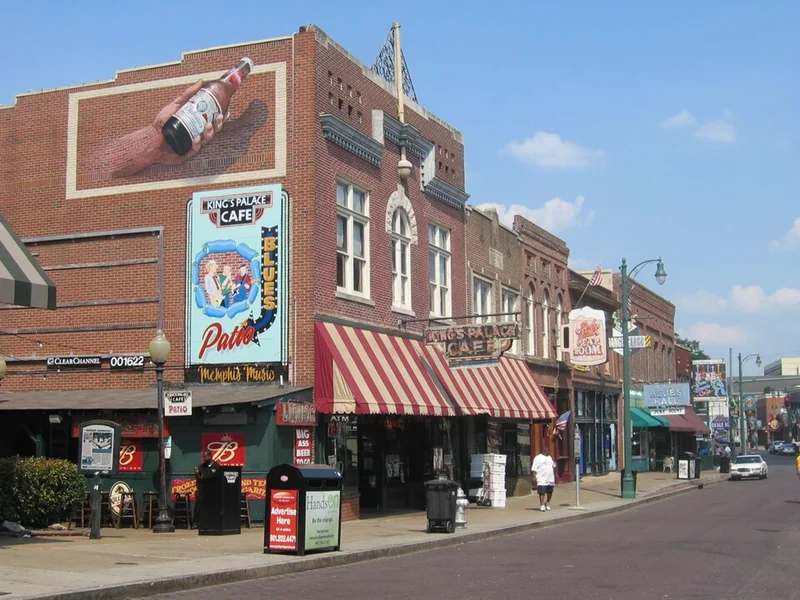
Shelby County · Memphis
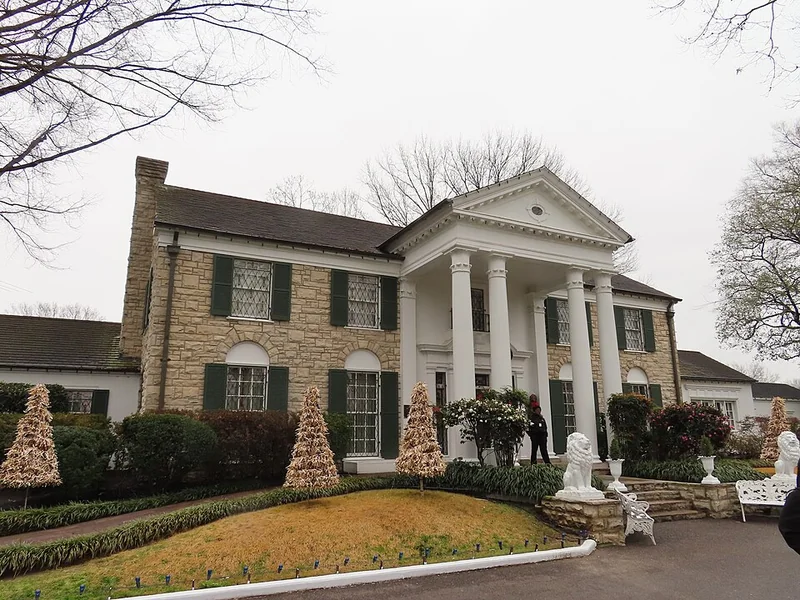
W.C. Handy published the first written blues compositions on Beale Street in 1912 — the street holds a congressional designation as the Home of the Blues. The entertainment district runs three blocks through downtown Memphis; entry to every bar is free, and live blues and soul bands play from noon through last call. Sun Studio is 20 minutes on foot north of the strip; Graceland is 7 miles south. The B.B. King Blues Club and Blues City Cafe anchor the strip; the adjacent Mississippi Riverfront is a free promenade with views of the bridge and the Arkansas flatlands.
Watch on YouTube · View on Google Maps
Planning Notes
Road trip logistics: Nashville to Memphis direct on I-40: 212 miles, about 3 hours 15 minutes. Adding Jack Daniel's via Lynchburg requires a detour south on US-231 through Shelbyville — add about 90 minutes. Most travelers spend 2–3 days in Nashville, a half-day at the distillery, and 1–2 days in Memphis. The route works in either direction; Nashville-first is easier for travelers flying into Nashville.
Plan your visit: Explore city guides for every destination in this article: Nashville, Memphis.